Commercial and Community Properties
Commercial Tree Removal NJ and HOA Services
Discuss tree removal requirements for your commercial site, HOA, or managed property and arrange an on-site estimate. Get a Free Estimate
Commercial and Community Properties
Discuss tree removal requirements for your commercial site, HOA, or managed property and arrange an on-site estimate. Get a Free Estimate
Commercial tree removal NJ often involves more than taking down a single tree. Property managers and community associations must consider parking areas, entrances, shared walkways, buildings, landscaping, and access for residents or customers. A large tree over a parking lot or a declining tree beside a common building may require careful scheduling and a removal plan that accounts for people and vehicles moving through the property.
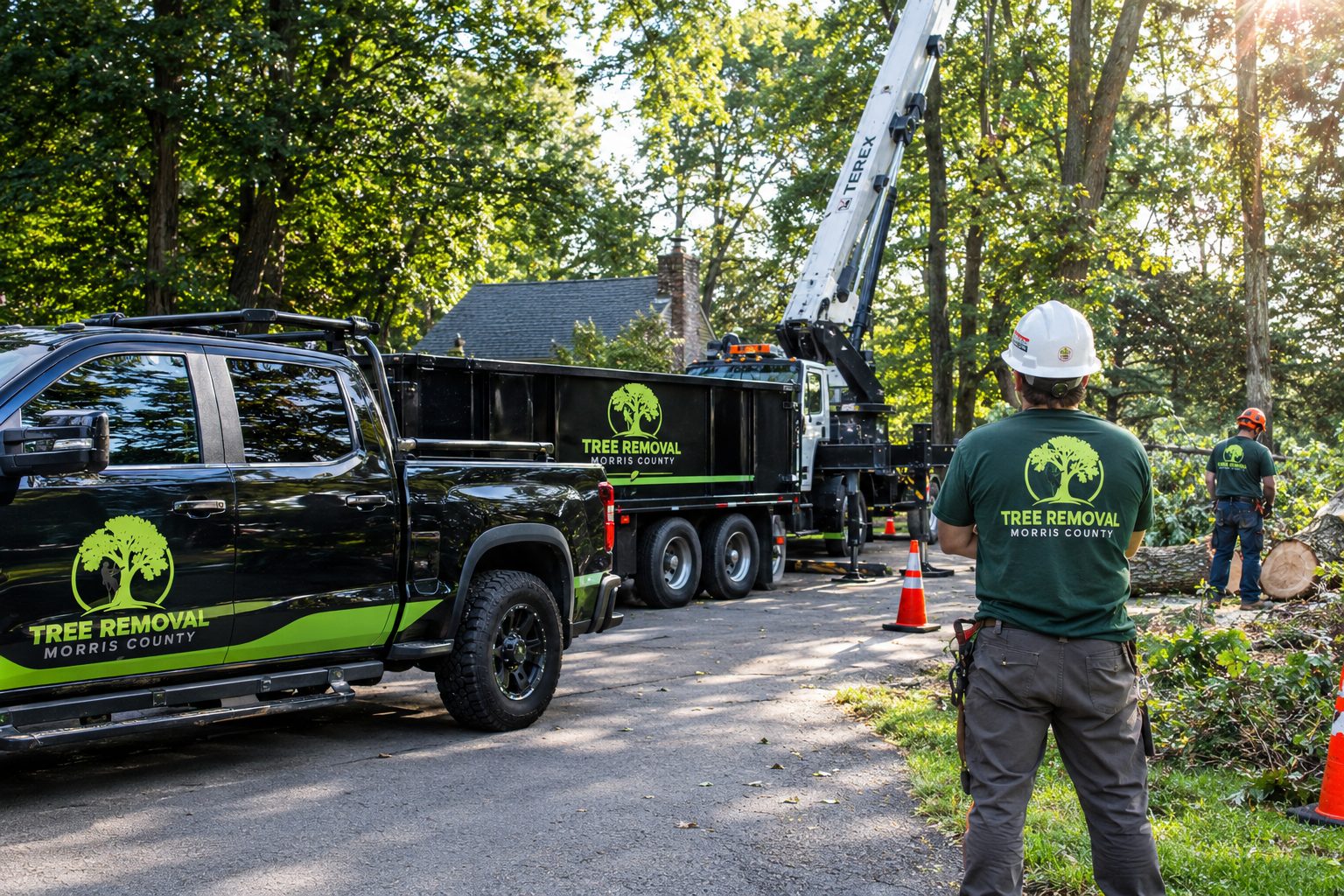
Tree Removal Morris County coordinates tree removal for commercial sites, HOAs, and managed residential communities throughout Morris County. We help connect property representatives with a vetted, registered local crew for standard removals, hazardous trees, storm damage, and crane-assisted projects. Crane assistance can be particularly useful for large trees near buildings, pools, fences, power lines, and confined common areas when site conditions permit.
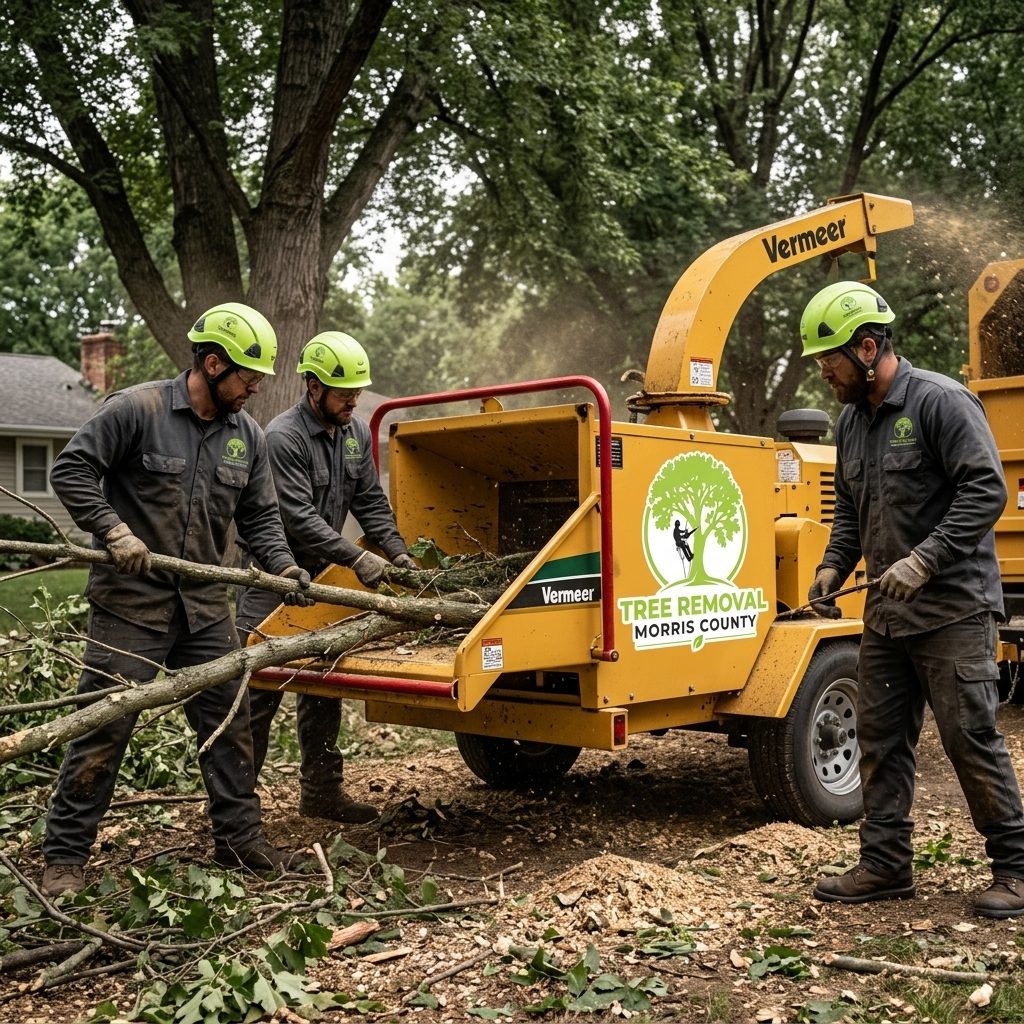
Each property has its own access restrictions, resident needs, and removal priorities. We coordinate the agreed work scope around the site's conditions and the practical requirements identified during the assessment.
HOA tree removal may involve shared lawns, common areas, community entrances, walking routes, and trees near individual homes. The removal scope should be clear about the trees involved, access arrangements, material handling, and the agreed cleanup.
Commercial properties may have trees near storefronts, offices, loading areas, parking lots, and pedestrian routes. An assessment identifies equipment access and any areas that need to be kept clear during the work.
Large trees near buildings, pools, fences, power lines, or limited-access yards may benefit from crane-assisted removal. Feasibility depends on crane positioning, ground conditions, overhead hazards, and a suitable place to land lifted sections.
A damaged tree can block an entrance, threaten a structure, or create a hazard in a shared outdoor area. The response depends on the urgency, tree stability, and safe access. Trees contacting power lines require utility coordination and must not be approached.
When several trees need attention, a property manager may want a coordinated scope that identifies each tree and its priority. The assessment and estimate establish which work is included and what access or equipment arrangements are needed.
| Service | Estimated Cost | Average |
|---|---|---|
| Standard tree removal | $300–$3,000 per tree | Depends on size and access |
| Hazardous or crane-assisted removal | $2,500–$5,000+ per tree | Depends on risk and equipment |
| Large dead tree near structures | May exceed $5,000 | Requires an individual assessment |
These are typical New Jersey planning ranges per tree, not fixed commercial or HOA pricing. Multiple-tree projects, access restrictions, crane requirements, and site hazards affect the estimate. Final pricing comes from an on-site estimate based on the agreed scope.
We coordinate removal requirements for commercial properties, HOAs, and managed communities across Morris County.
Crane-assisted removal can help address large trees close to buildings, pools, parking areas, and other obstacles when the site permits.
New Jersey requires tree care businesses to register with the NJ Board of Tree Experts and employ a licensed tree care operator.
The estimate identifies the agreed removal work, equipment needs, access considerations, and cleanup arrangements.
Managing a commercial property or HOA in Morris County? Contact us to discuss the trees, site access, and project scope.
Free — no obligations
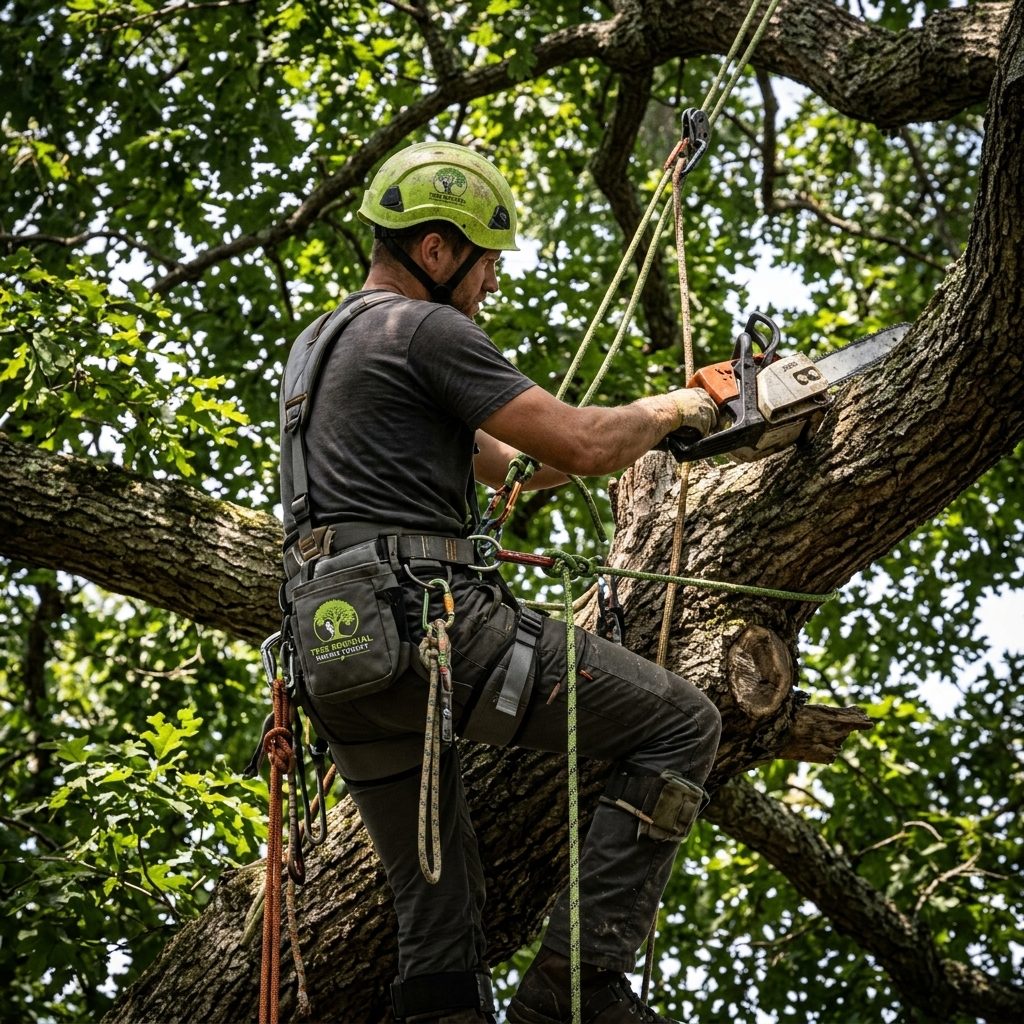
Identify the trees involved, the main concerns, access restrictions, and any important resident, customer, or parking considerations.
The crew reviews tree condition, surrounding structures, equipment access, and whether crane assistance may be suitable.
The proposed work, expected equipment needs, cleanup, and on-site estimate are reviewed before the project proceeds.
The work is carried out according to the agreed scope and site conditions, with practical access arrangements discussed in advance.
Cleanup is included in the agreed scope. Specific arrangements for branches, trunk sections, and wood should be confirmed during estimating.