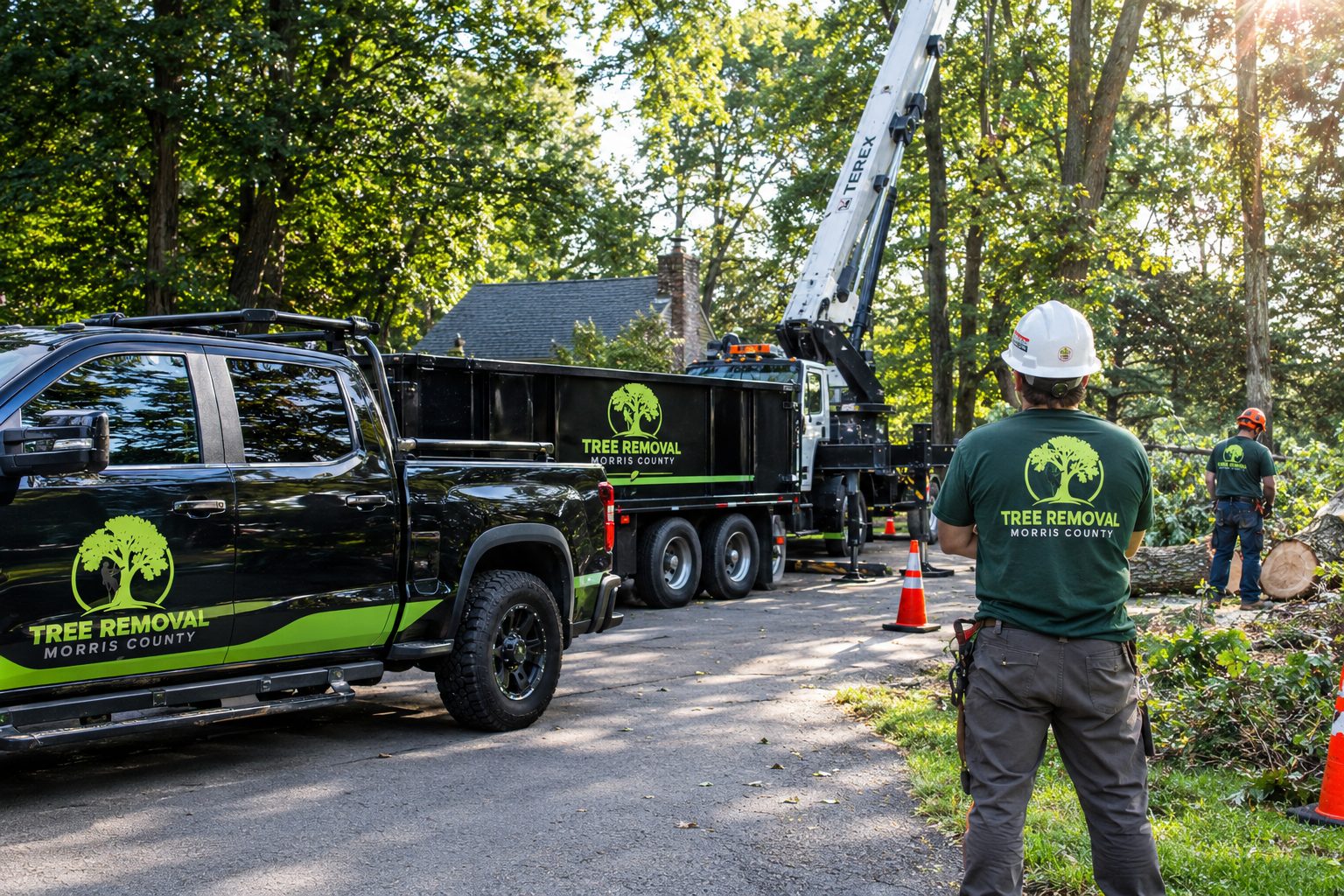
Large and Hazardous Trees
Large & Hazardous Tree Removal NJ
Arrange an assessment for a large, dead, leaning, or structurally damaged tree near your property. Get a Free Estimate
Large and Hazardous Trees
Arrange an assessment for a large, dead, leaning, or structurally damaged tree near your property. Get a Free Estimate
Large tree removal requires careful planning when a tree is tall, heavy, dead, structurally compromised, or growing close to a house or other obstacle. Morris County properties often have mature oaks and maples near buildings, fences, driveways, and neighboring lots. The size of a tree can make the removal complicated even when the surrounding yard appears spacious, especially if the canopy extends over structures or the trunk has visible damage.
Hazardous tree removal starts with an assessment of the tree's condition, position, access, and surrounding hazards. A large dead tree near a house may need a controlled section-by-section removal plan, and crane assistance may be suitable where the setup and lifting conditions allow. The appropriate method depends on the actual site, not simply the tree's height or species.
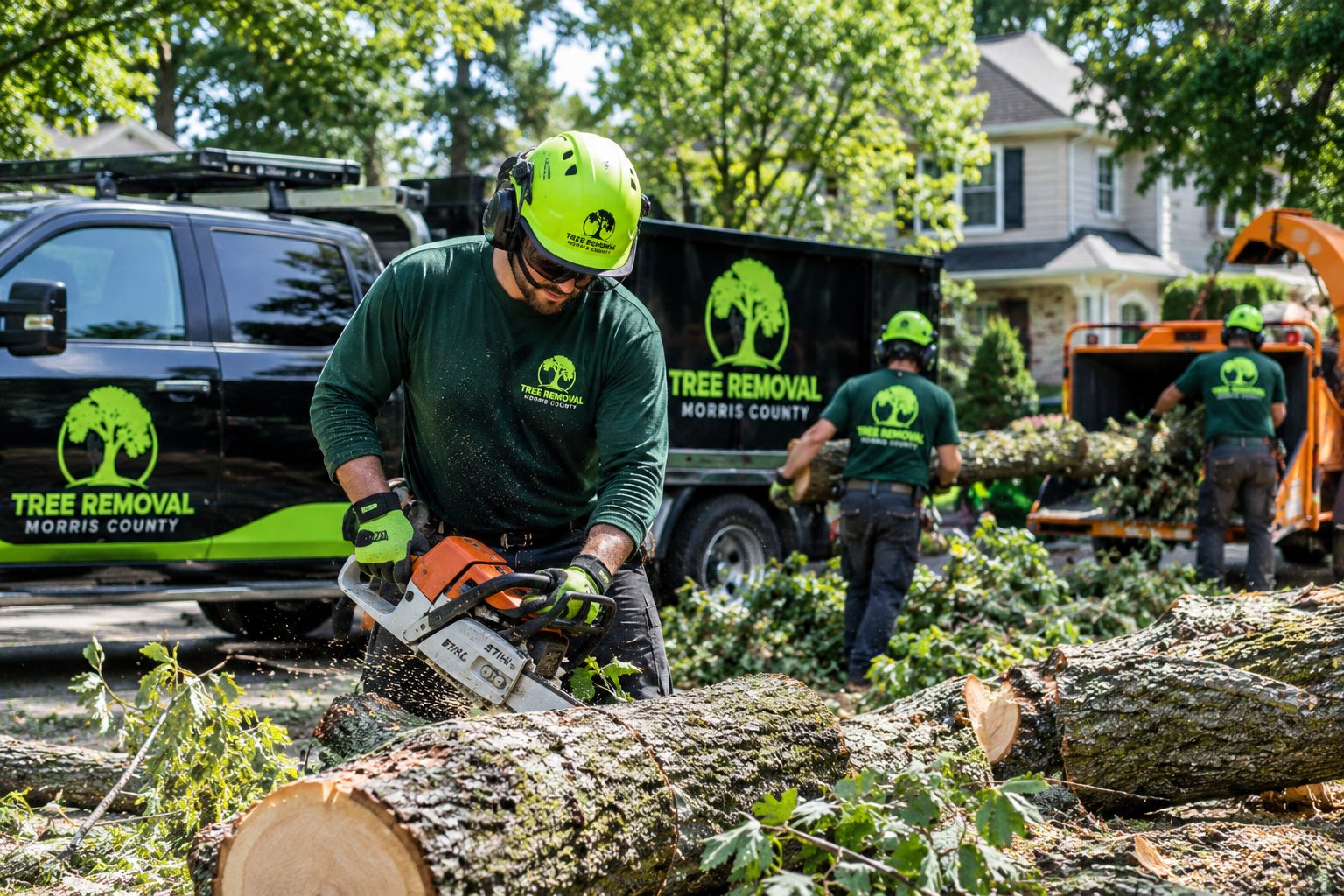
A tree can become a concern because of its condition, location, or the consequences of a failure. An assessment helps distinguish routine removal needs from situations that require additional precautions and specialized equipment.
Mature trees with branches over a roof or a trunk close to a house can be difficult to remove using ordinary dropping methods. Crane-assisted removal may allow sections to be lifted away when there is a suitable setup area and safe lifting plan.
Dead trees may have brittle branches, weakened trunks, and unpredictable breakage. Ash trees affected by emerald ash borer can decline and become a removal concern as their structural condition changes. A site assessment helps determine the safest practical approach.
A sudden lean, major crack, split trunk, or damaged root plate may indicate a serious structural concern. Keep clear of potentially unstable trees and arrange an assessment rather than attempting to brace or cut the tree yourself.
Pools, fences, neighboring buildings, patios, and limited driveway access can restrict the space available for conventional removal. Crane assistance may help move sections over obstacles if the site supports appropriate crane positioning and lifting.
Trees near electrical lines require specialized precautions and coordination with the utility where necessary. Never touch or approach a tree contacting a power line. A removal plan must address electrical hazards before work proceeds.
| Service | Estimated Cost | Average |
|---|---|---|
| Standard tree removal | $300–$3,000 per tree | Depends on size and access |
| Hazardous or crane-assisted removal | $2,500–$5,000+ per tree | Depends on risk and equipment |
| Large dead tree near structures | May exceed $5,000 | Requires an individual assessment |
These are typical New Jersey planning ranges. Large tree removal can cost more when the tree is dead, unstable, close to structures, or difficult to access. Final pricing always comes from an on-site estimate.
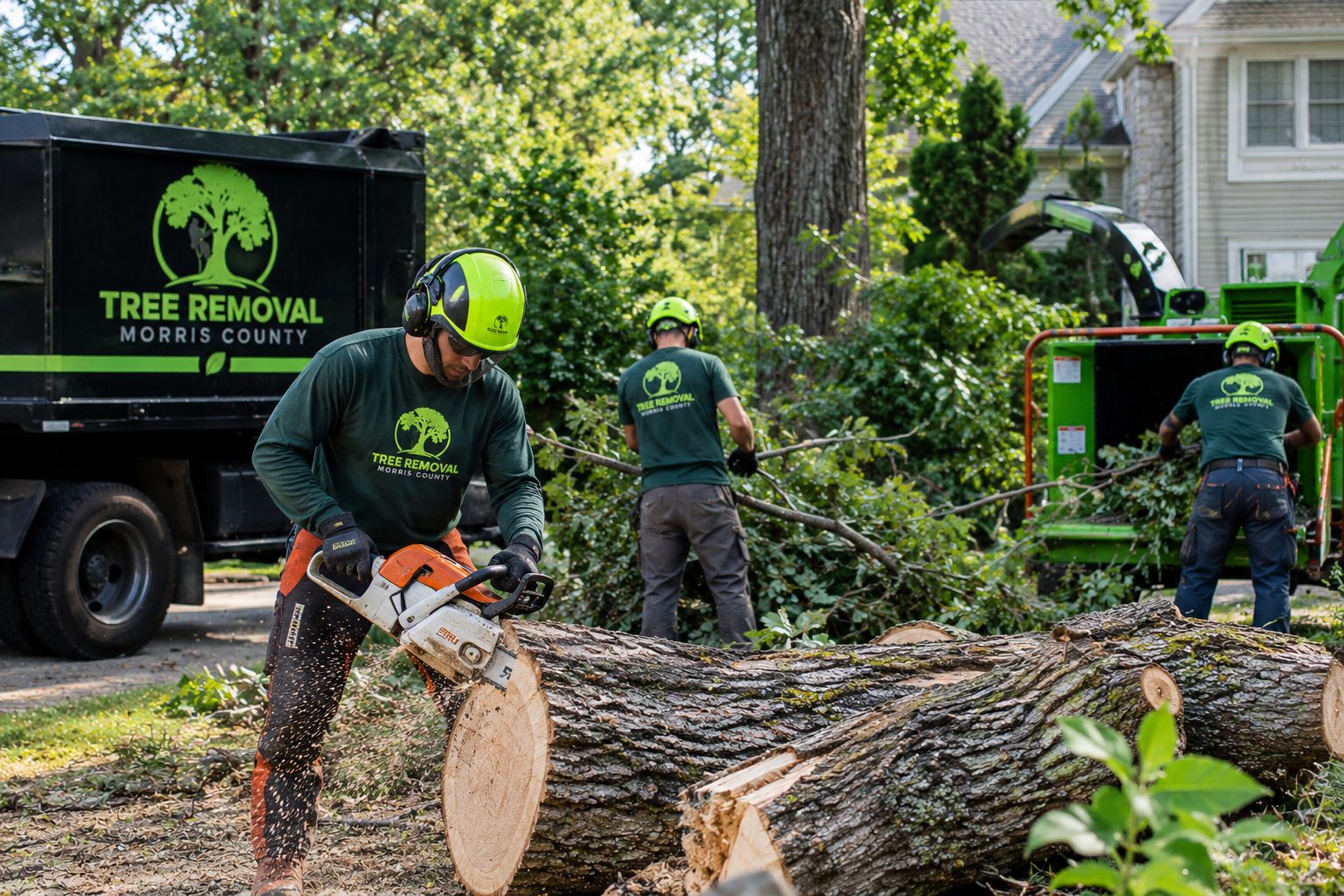
Crane assistance can be considered for large trees near homes, pools, power lines, and confined yards when conditions allow.
The removal approach is based on tree condition, surrounding obstacles, access, and equipment requirements.
New Jersey requires tree care businesses to register with the NJ Board of Tree Experts and employ a licensed tree care operator.
Hazards and access can significantly change the work required, so the final price is established through an on-site estimate.
Concerned about a large or hazardous tree near your home? Arrange an on-site assessment to discuss the safest practical removal options.
Free — no obligations
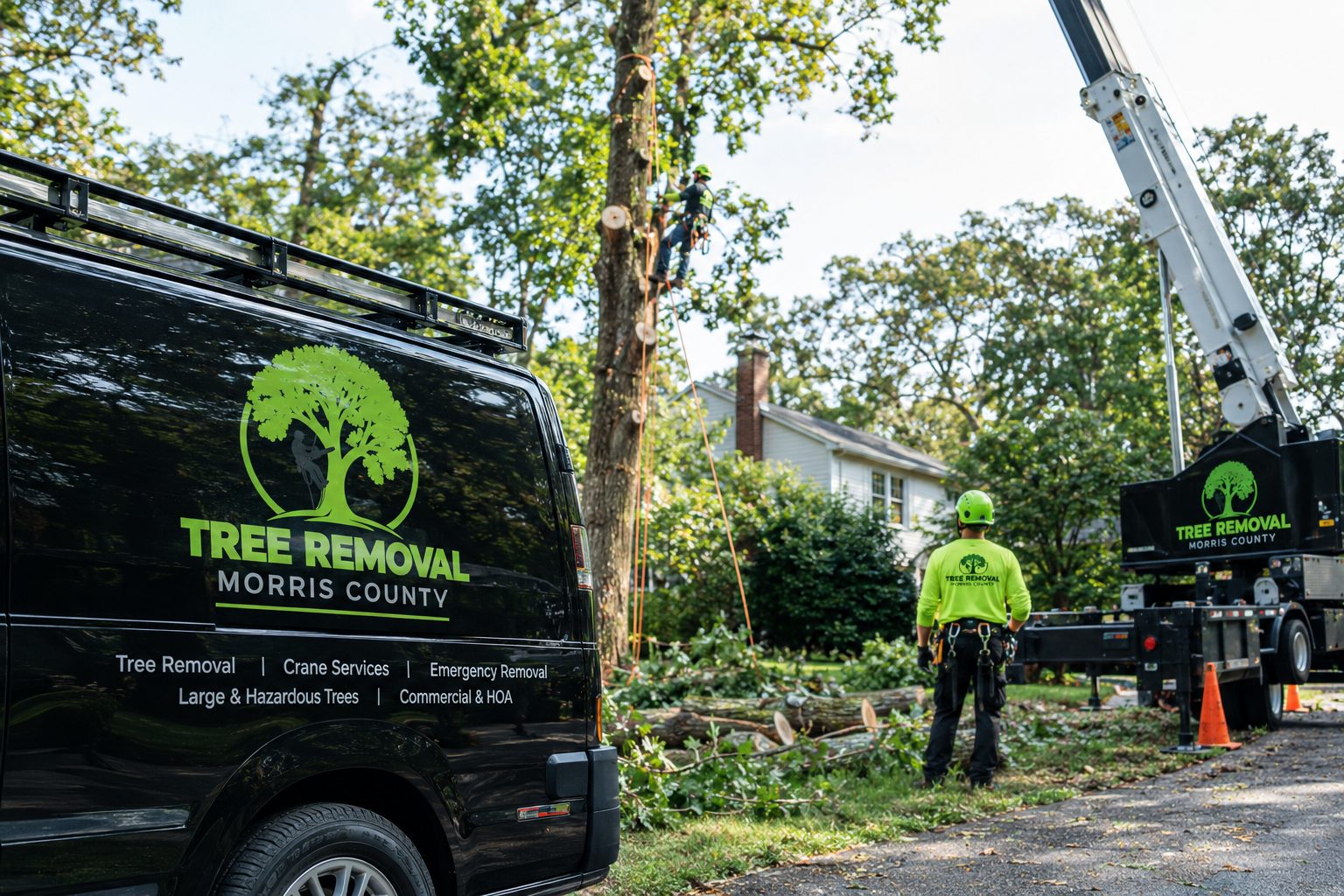
Explain whether the tree is dead, leaning, split, damaged by weather, or growing close to a structure.
The crew considers tree stability, nearby buildings, overhead hazards, access, and the room available for equipment.
Depending on the site, the plan may involve conventional rigging or crane-assisted removal. Electrical hazards and unstable conditions must be addressed before work proceeds.
The on-site estimate reflects the planned work, equipment, access requirements, and complexity of the removal.
The crew carries out the agreed work and handles cleanup according to the scope discussed in the estimate.