Emerald Ash Borer in Morris County: Should You Remove Your Ash Trees?
Emerald ash borer (EAB) is an invasive beetle that kills ash trees. It was first found in New Jersey in 2014 and has since spread across the state, including Morris County. Untreated ash trees rarely survive once infested.
How to tell if your ash tree is infested
- Thinning canopy starting at the top of the tree
- Small D-shaped exit holes in the bark, about 1/8 inch wide
- Bark splitting and S-shaped tunnels under loose bark
- Heavy woodpecker damage, with light patches where bark has been flaked off
- Sprouts growing from the lower trunk
Not sure if it is even an ash? Ash trees have opposite branches and compound leaves with five to nine leaflets. A certified arborist can confirm.
Treat or remove?
A healthy, valuable ash that has lost little of its canopy can sometimes be protected with insecticide treatments applied by a licensed professional, repeated every few years. Once a large share of the canopy is gone, treatment is usually no longer worthwhile and removal is the safer path.
Why dead ash should not wait
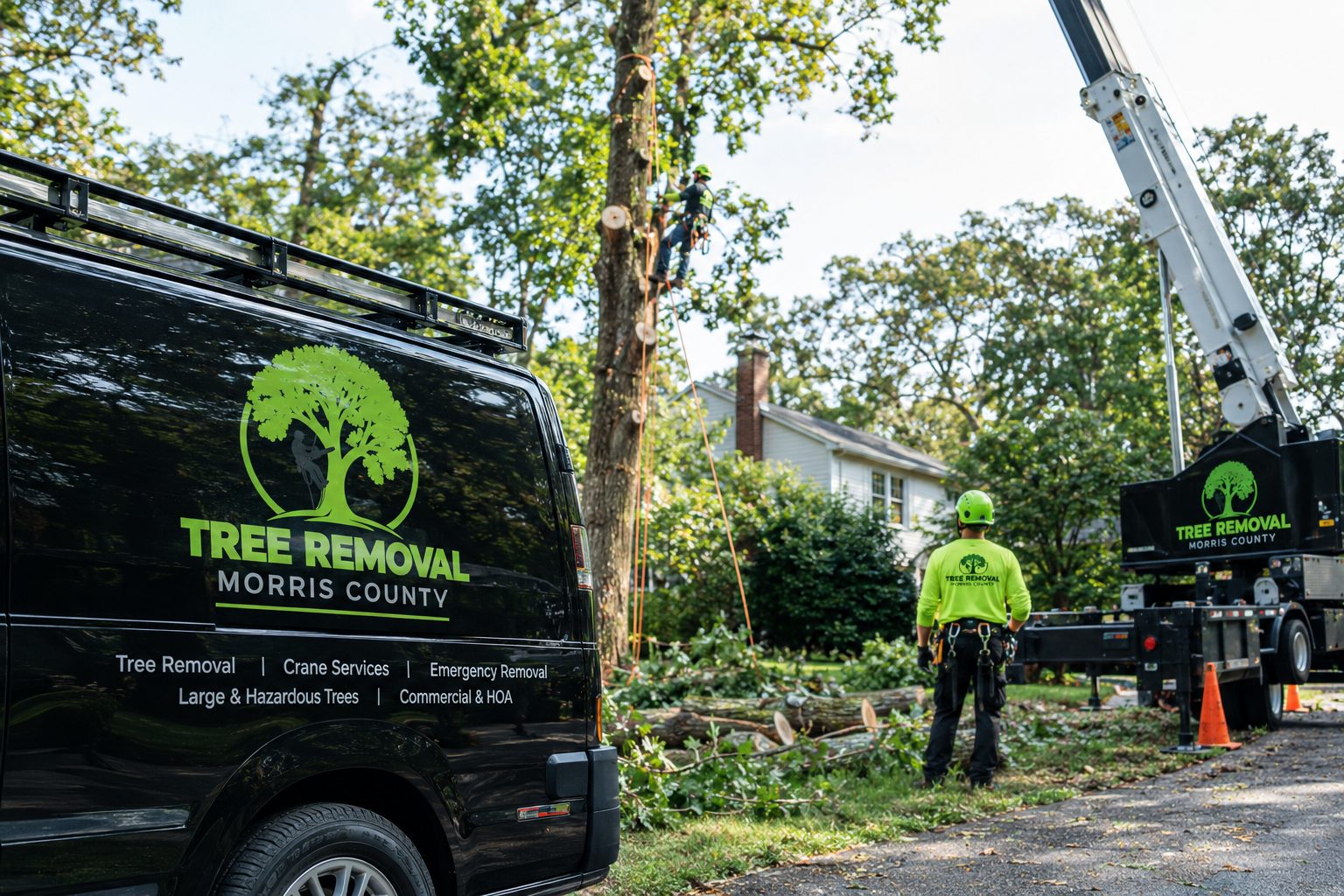
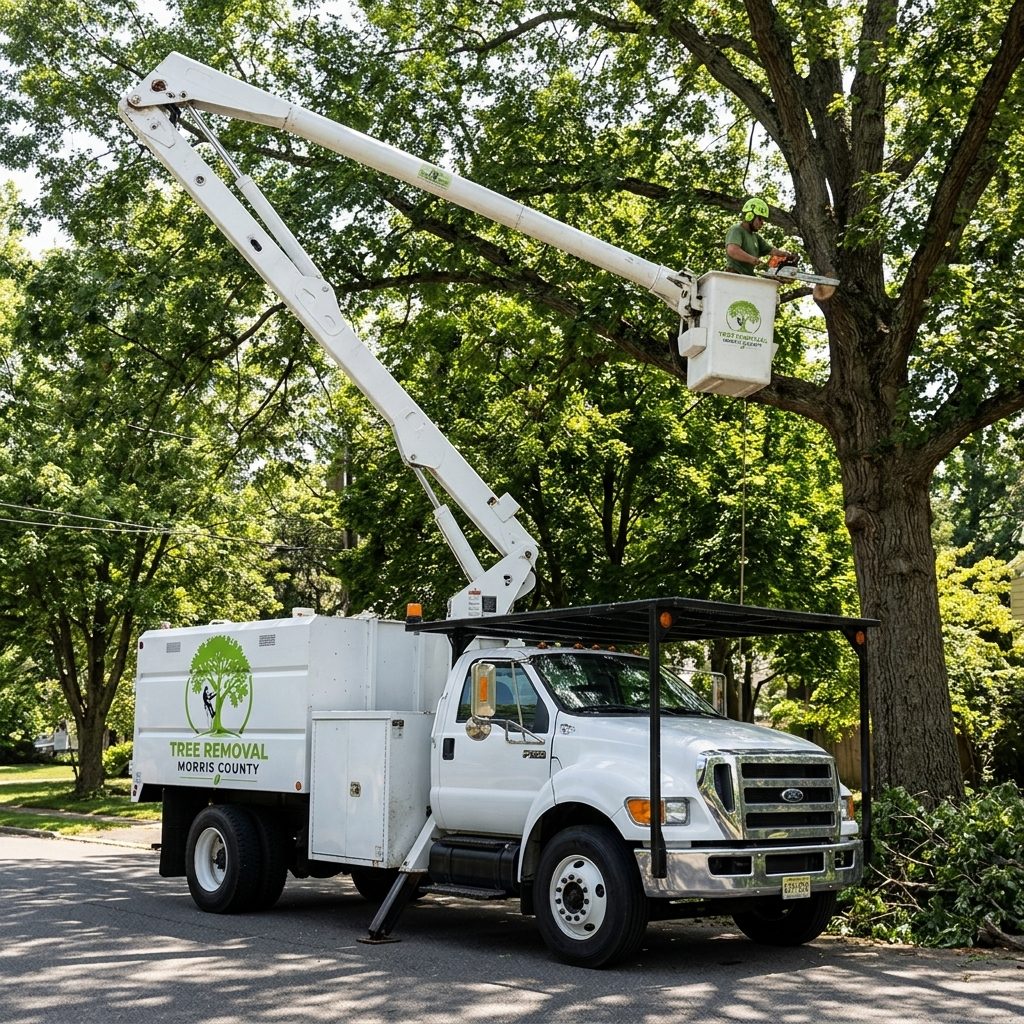
Dead ash wood dries out and becomes brittle unusually quickly. Limbs can drop without warning, and whole trees can snap in a storm. That brittleness also makes them dangerous to climb, so dead ash near a house often needs a lift or crane. The longer you wait, the more the job can cost. See our guide to when a crane is needed.
Got several dead ash trees? Removing them in one visit is usually more cost-effective. Ask about it on your free estimate, and see typical tree removal costs in NJ.
Where EAB-killed ash causes the most trouble
Wooded lots in Randolph, Mount Olive, Montville and Denville often have ash along driveways, property lines and behind houses. HOAs and commercial sites can have dozens along walkways and parking areas; see commercial and HOA tree removal.
Next step
If your ash is thinning or dead, get it looked at before the next storm season. Learn about large and hazardous tree removal, or send photos with your estimate request.
Frequently Asked Questions
Is emerald ash borer in Morris County, NJ?
Yes. Emerald ash borer was first found in New Jersey in 2014 and has spread across the state, including Morris County.
Can an ash tree with emerald ash borer be saved?
Sometimes, if it is still healthy with most of its canopy and is treated by a licensed professional. Trees that have lost much of their canopy are usually removed.
Why are dead ash trees dangerous?
Dead ash becomes brittle quickly, so limbs can fall without warning and the tree is risky to climb. Removal near structures often needs a lift or crane.